Securing S3 Buckets🔗

Server-Side Encryption with S3 (SSE-S3)🔗
SSE-S3 is a server-side encryption method provided by Amazon S3 where AWS automatically encrypts your data when it is stored and decrypts it when accessed.
The encryption keys are fully managed by AWS.
1. How SSE-S3 Works🔗
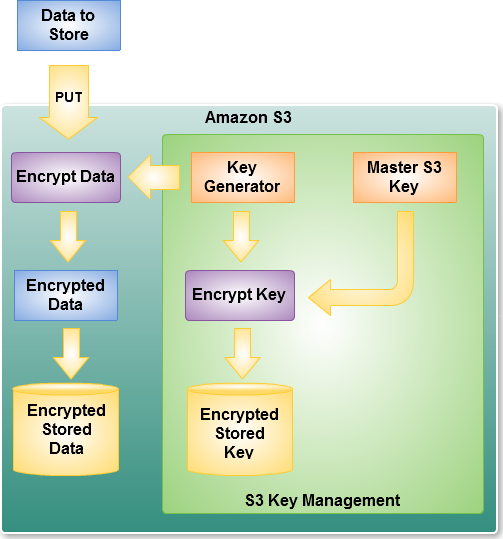


Process:
- Client uploads object to S3
- S3 encrypts the object using AES-256 encryption
- Encrypted object is stored on disk
- When a user retrieves the object, S3 decrypts it automatically
Encryption and decryption are transparent to the user.
2. Encryption Algorithm🔗
SSE-S3 uses:
This is a symmetric encryption algorithm widely used for secure storage.
3. Enabling SSE-S3🔗
You can enable SSE-S3 in three ways.
1. Default Bucket Encryption🔗
Configure encryption on the bucket so all objects are encrypted automatically.
Steps:
- Open S3 console
- Select bucket
- Go to Properties
- Enable Default encryption
- Choose SSE-S3
Now every uploaded object is encrypted.
2. During Object Upload🔗
You can specify encryption when uploading.
Example CLI:
This instructs S3 to encrypt using SSE-S3.
3. Using API Headers🔗
When using the REST API:
4. Checking if an Object is Encrypted🔗
Run:
Output includes:
This confirms SSE-S3 encryption.
5. SSE-S3 vs Other S3 Encryption Methods🔗
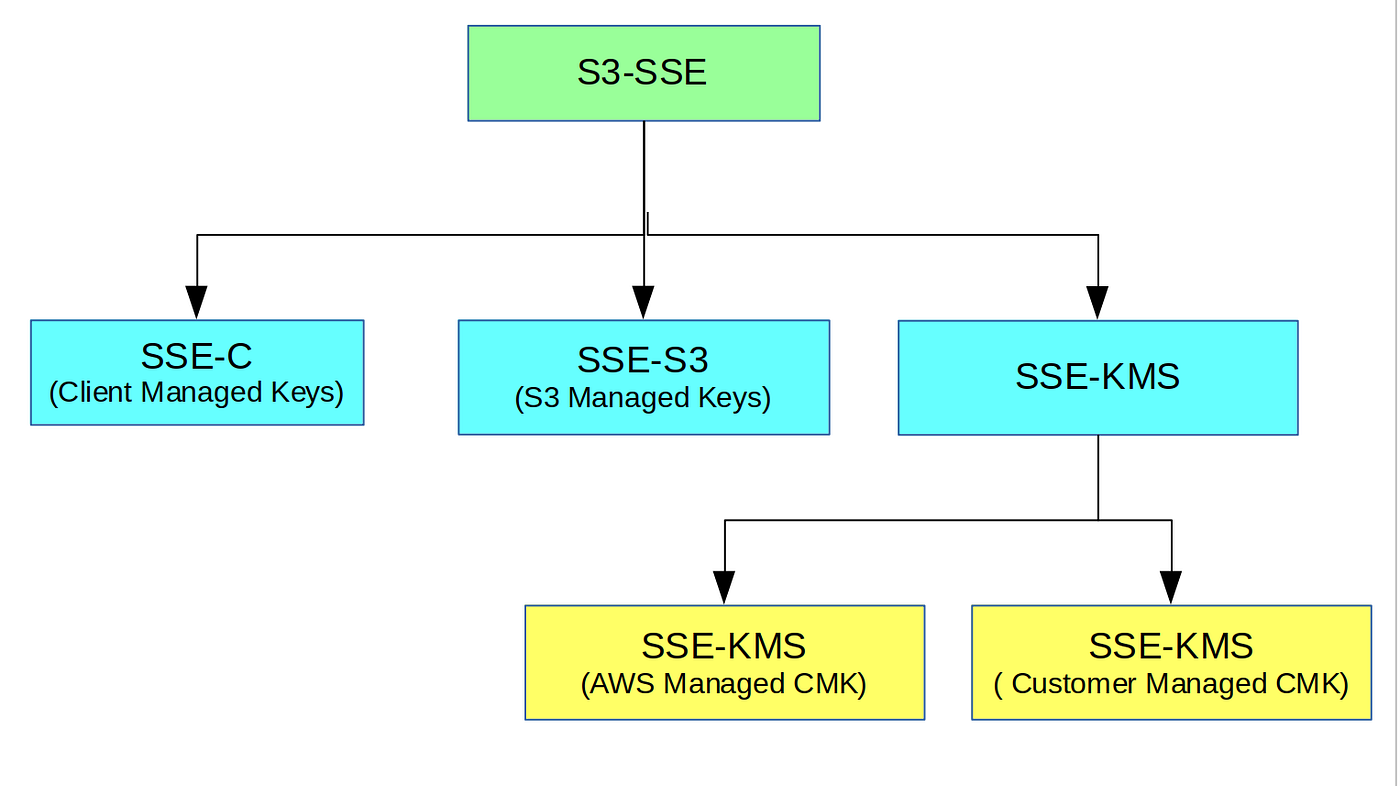
S3 supports three major server-side encryption methods.
| Encryption Type | Key Managed By | Use Case |
|---|---|---|
| SSE-S3 | AWS | Simple encryption |
| SSE-KMS | AWS Key Management Service | Audit + control |
| SSE-C | Customer | Customer provides keys |
SSE-S3🔗
- Keys managed entirely by S3
- Simplest option
- No extra cost
SSE-KMS🔗
Uses:
AWS Key Management Service
Advantages:
- Key rotation
- Access auditing
- Fine-grained permissions
Common in enterprise pipelines.
SSE-C🔗
Customer provides encryption key with every request.
Rarely used because:
- Hard to manage
- AWS never stores the key
6. Example Data Engineering Scenario🔗
Pipeline:
Services involved:
- Amazon Kinesis
- AWS Lambda
- Amazon Athena
If the S3 bucket has default SSE-S3 encryption enabled:
- Lambda uploads data normally
- S3 encrypts objects automatically
No changes required in the pipeline.
7. Example Bucket Policy Enforcing Encryption🔗
You can enforce encryption by denying uploads without it.
Example:
{
 "Version":"2012-10-17",
 "Statement":[
  {
   "Effect":"Deny",
   "Principal":"*",
   "Action":"s3:PutObject",
   "Resource":"arn:aws:s3:::secure-bucket/*",
   "Condition":{
     "StringNotEquals":{
       "s3:x-amz-server-side-encryption":"AES256"
     }
   }
  }
 ]
}
Meaning:
Objects must be uploaded with SSE-S3 encryption.
8. Advantages of SSE-S3🔗
✔ Automatic encryption ✔ No key management ✔ High performance ✔ No additional cost ✔ Simple configuration
✅ Interview Answer (Short)
SSE-S3 is a server-side encryption method in Amazon S3 where AWS automatically encrypts objects using AES-256 before storing them. The encryption keys are managed by AWS and decryption happens automatically when the object is retrieved.