Airflow Scheduler — Deep Dive (Internals & Mental Model)🔗
In Apache Airflow🔗
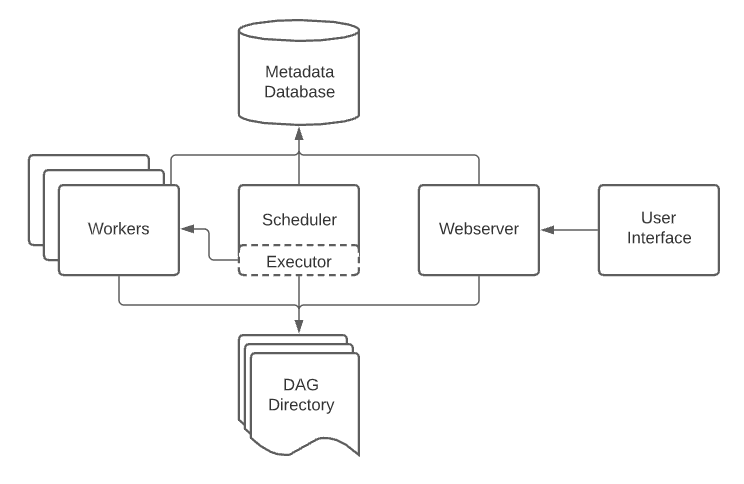

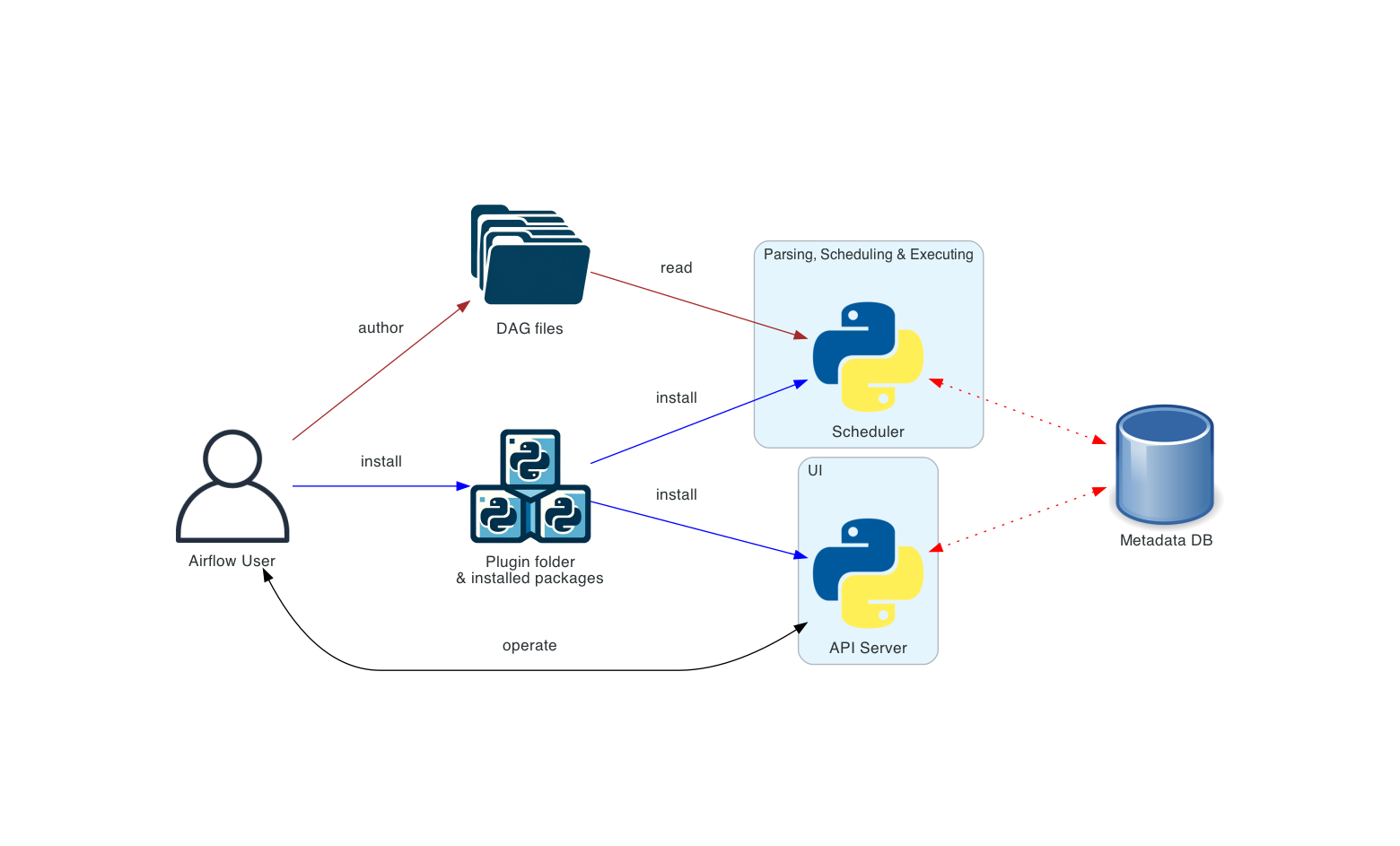
The Scheduler is the most complex and critical component of Airflow. If the scheduler is unhealthy, Airflow looks alive but nothing runs.
1) What the Scheduler Really Does (Not Marketing Version)🔗
The scheduler is not a simple cron. It is a continuous decision engine that:
- Parses DAGs
- Decides when DAG runs should exist
- Decides which task instances can run
- Enforces dependencies, limits, and policies
- Persists every decision to the metadata database
It does zero execution itself.
2) Scheduler Core Loop (Very Important)🔗
The scheduler runs an infinite loop called the scheduling heartbeat.
Conceptually:
while True:
    parse_dags()
    create_dag_runs()
    create_task_instances()
    evaluate_dependencies()
    queue_tasks()
    sleep(heartbeat)
Every iteration:
- Reads from metadata DB
- Writes scheduling decisions back
3) DAG Parsing Phase (Why Parsing Is Expensive)🔗
What Happens🔗
- Scheduler scans DAG folder
- Imports each DAG file
- Executes top-level Python code
- Extracts DAG objects
Writes to DB🔗
- Updates
dagtable - Updates
serialized_dagtable (Airflow 2.x)
Why Heavy DAG Files Kill Scheduler🔗
Bad DAG file:
This runs every parse cycle.
Impact:
- CPU spikes
- Scheduler lag
- DAGs appear missing or delayed
Rule:
DAG files define structure, not work
4) DAG Run Creation Logic (Critical)🔗
Scheduler checks for each DAG:
start_dateschedule_intervalcatchupmax_active_runs- last
dag_run.execution_date
If a run is needed:🔗
- Inserts row into
dag_run - Sets state =
RUNNING
Important insight:
DAG runs are created before any task is eligible to run
5) Task Instance Materialization🔗
For every DAG run:
- Scheduler creates TaskInstance rows
- One row per task per logical date
Initial state:
This is pure bookkeeping, not execution.
6) Dependency Resolution (The Real Scheduler Work)🔗
This is where most CPU time goes.
For each TaskInstance, scheduler checks:
Task Dependencies🔗
- Upstream task states
- Trigger rules
depends_on_past
DAG-Level Limits🔗
max_active_runsconcurrency
Global Limits🔗
- Pools
- Parallelism
- Executor slots
Only if all checks pass:
7) Queuing Tasks🔗
Scheduler hands off runnable tasks to the executor.
Metadata DB transition🔗
At this point:
- Scheduler responsibility ends
- Executor responsibility begins
Scheduler never waits for execution.
8) Scheduler Heartbeat & Locking🔗
Scheduler runs with a heartbeat:
- Default: a few seconds
-
Every heartbeat:
-
Acquire DB lock
- Make scheduling decisions
- Release lock
Why Locking Exists🔗
- Prevent multiple schedulers from scheduling the same task
- Ensure consistency in HA mode
If DB is slow:
- Heartbeats miss
- Scheduling stalls
- Tasks remain queued
9) High Availability Scheduler (Multiple Schedulers)🔗
In Airflow HA:
- Multiple scheduler processes run
- Only one scheduler instance makes a scheduling decision for a task
- DB-level locks enforce safety
Important:
Scaling schedulers helps parsing and decision throughput, not execution speed
10) Scheduler Bottlenecks (Real Production Issues)🔗
1) Metadata DB Latency🔗
- Slow
task_instancequeries - Long scheduling cycles
- DAGs appear “stuck”
2) Too Many DAGs🔗
- Parse time dominates
- Scheduler never catches up
3) Too Many Small Tasks🔗
- Millions of state transitions
- DB write amplification
4) Sensors🔗
- Long-running sensor tasks block worker slots
- Increase scheduler bookkeeping
11) Scheduler vs Executor Responsibilities🔗
| Scheduler | Executor |
|---|---|
| Creates DAG runs | Executes tasks |
| Resolves dependencies | Assigns workers |
| Enforces limits | Manages worker lifecycle |
| Writes scheduling state | Updates execution state |
If tasks are queued but not running:
- Executor issue
If tasks never get queued:
- Scheduler issue
12) Why Scheduler Is State-Driven (Not Event-Driven)🔗
Scheduler does not react to events.
Instead:
- Polls metadata DB
- Recomputes state
- Makes idempotent decisions
This design enables:
- Restarts without loss
- Backfills
- Partial reruns
But costs:
- High DB load
- Slower reaction time
13) Mental Model (Internal Truth)🔗
Think of scheduler as:
A loop that repeatedly asks:
"Given everything I know from the DB,
what is allowed to run right now?"
Then it updates the DB accordingly.
One-Line Summary🔗
The Airflow scheduler is a state-driven decision engine that continuously parses DAGs, creates DAG runs, resolves dependencies, and queues task instances using the metadata database as its single source of truth.